Spuren einer umfassenderen Wirklichkeit
Ideen, Beobachtungen und Erfahrungen aus verschiedenen Jahrhunderten
For millennia, humans have been preoccupied with the question of whether our perception captures the entirety of reality. In science, philosophy, religion, art, and literature, one can find remarkable ideas about additional dimensions, different temporal orders, and a reality that usually remains hidden from us.
A journey of discovery through science, philosophy, religion, art, literature, and extraordinary human experiences.
The 2T-M theory opens up the possibility of viewing such thoughts and experiences from a common perspective. The following examples show interesting parallels, without this already constituting scientific proof for the theory.
Research matrix – from hypothesis to observation
What consequences would a universe with nine spatial and two time dimensions have? The research matrix connects hypothetical expectations with possible observations. The goal is to develop concrete, scientifically verifiable research questions from this.
A journey of discovery through science, philosophy, religion, art, literature, and extraordinary human experiences.
From 1500 BC
Hinduismus
Die sichtbare Welt könnte Teil einer umfassenderen Wirklichkeit sein.
From the 5th century BC
Buddhism
Perception and consciousness could extend beyond our usual boundaries.
4th century BC
Plato
The perceived reality could just be a shadow of a more comprehensive reality.
1st century AD
Christianity
The Kingdom of God could already be in our midst.
3rd Century
Plotinus
A higher reality does not have to be spatially distant.
4th/5th century
Augustinus
Time, memory, and consciousness are closely interconnected.
Raum und Zeit sind grundlegend für die Struktur menschlicher Erfahrung.
1781
Immanuel Kant
1790s
William Blake
Die Grenzen unserer Wahrnehmung bestimmen, wie wir die Welt erleben.
1884
Edwin Abbott
Ein höherdimensionales Objekt erscheint in einer niedrigeren Dimension nur ausschnittweise.
1902
William James
Besides our ordinary waking consciousness, other forms of consciousness may exist.
From 1906
Hilma af Klint
Artistic representation of invisible structures and orders.
1927
J. W. Dunne
The idea of additional time dimensions arises from the study of dreams.
1944
C. G. Jung
Visionary experiences with altered perception of space and time.
1954
Salvador Dalí
Christ and a four-dimensional hypercube in a work of art.
1966
Ian Stevenson
Reports from children about memories of past lives.
1969
Jacques Vallée
Ungewöhnliche Erscheinungen aus einer höherdimensionalen Perspektive betrachten.
1981
Philip K. Dick
A hidden reality behind our ordinary experience.
From 1990
Mathematical models with two time dimensions.
Itzhak Bars
Present
String/M-Theory
Additional spatial dimensions and eleven-dimensional models.
Research
Consciousness and death research
Wissenschaftliche Untersuchung aussergewöhnlicher Erfahrungen und Bewusstseinszustände.
Research
Nahtoderfahrungen
Altered perception of space and time at the threshold of death.
Research
Deathbed visions
Encounters with the deceased during the dying process.
Research
Terminal Clarity
Unexpected mental clarity shortly before death.
Research
Out-of-body experiences
Den eigenen Körper aus einer anderen räumlichen Perspektive erleben.
RELIGION
Hinduism – Different Levels of Reality
Could the world familiar to us represent only one level of existence?
01
Der ursprüngliche Gedanke
In Hinduism, there are various philosophical and religious traditions.
Some deal particularly intensively with the relationship between the visible world and a more comprehensive reality.
Terms such as Brahman, Atman, Maya, reincarnation, and liberation are interpreted differently in various schools.
Common to many of these considerations is the question of the relationship between ordinary experience and a deeper reality.

02
The trail to the 2T-M theory
The 2T-M theory postulates a reality that goes beyond our accustomed 3+1-dimensional experience.
The idea of different levels of existence offers a philosophical-religious parallel to this.
Particularly interesting is the question of whether what we experience as the entire reality could merely represent a limited perspective.
Analogous translation · Politeia, Book VII, 515c
The crucial connection: Our immediate experience does not have to reflect the complete reality.
RELIGION
Buddhism – Perception and Transition
What do people experience on the border between life and death?

The original thought
The Trail to the 2T-M Theory
Buddhist traditions deal intensively with the origin and variability of our perception.
The experience of a fixed, unchanging reality is critically examined in many schools.
Some Buddhist traditions, especially in Tibetan Buddhism, have concepts of transitional states between death and rebirth.
The 2T-M theory opens up the possibility of a transition between different dimensional experiential structures.
The Buddhist engagement with perception, states of consciousness, and transitions provides interesting comparative motifs for this.
The religious concepts are independent and must not be equated with a physical dimensional model.
The crucial connection: Some near-death experiences simultaneously contain unusual spatial and temporal experiences.
PHILOSOPHY
Plato – The Allegory of the Cave
Was, wenn wir nur einen Schatten der eigentlichen Wirklichkeit sehen?
The original thought

In Platons berühmtem Höhlengleichnis leben Menschen seit ihrer Geburt gefesselt in einer Höhle. Sie sehen lediglich Schatten, die auf eine Wand geworfen werden. Weil sie nichts anderes kennen, halten sie diese Schatten für die vollständige Wirklichkeit.
Erst wenn ein Mensch die Höhle verlässt, erkennt er, dass die Schatten nur Abbilder einer umfassenderen Realität sind.
Für die 2T-M-Theorie ist besonders interessant, dass ein dreidimensionales Geschehen auf zweidimensional erscheinende Schatten reduziert wird.
The trail to 2T-M theory
The Allegory of the Cave offers a vivid parallel to the idea of limited dimensional perception.
Our familiar 3+1-dimensional world could also only show a section of a more comprehensive reality.
Just as the people in Plato's cave consider their shadow world to be complete, we too might confuse the limits of our perception with the limits of reality.
Sinngemässe Übersetzung · Politeia, Buch VII, 515c
The crucial connection: What we perceive does not have to be everything that exists.
RELIGION
Christianity
Das Reich Gottes ist mitten unter euch
Könnte der Himmel bereits Teil unserer gegenwärtigen Wirklichkeit sein?
The original thought
In the Gospel of Luke 17:20–21, Jesus speaks of the Kingdom of God. Depending on the translation, his statement is rendered as "in your midst" or "within you".
The passage has been interpreted differently throughout history. Particularly interesting is the idea that the Kingdom of God does not necessarily have to be understood exclusively as a distant geographical place.
The trail to the 2T-M theory
The 2T-M theory postulates that heaven could be part of a more comprehensive dimensional reality. It would therefore not have to lie somewhere outside our universe.
The religious concept of a reality that is already present but not immediately recognizable shows an interesting conceptual proximity to this.
The crucial connection
Heaven could be here.

PHILOSOPHY
Plotinus – A higher reality that does not lie elsewhere
Must a more comprehensive reality be spatially distant?

The original thought
The philosopher Plotinus distinguished between the sensory world and a deeper, intelligible reality. For him, this higher order was not simply another geographical location. It belonged to a different level of being. With this, Plotinus challenged the notion that everything real must be localized in the ordinary spatial sense.
Die Spur zur 2T-M-Theorie
The 2T-M theory postulates that our familiar world is part of a more comprehensive dimensional structure. Additional dimensions would therefore not necessarily be located in a distant place. Plotinus' idea of a higher reality, which is not simply "elsewhere," offers a remarkable philosophical parallel to this.
Own translation of an excerpt · Enneads V,8,4
The crucial connection: A more comprehensive reality can be present without being accessible to ordinary perception.
PHILOSOPHY
Augustinus – Zeit und Bewusstsein
Is time really what our clocks measure?
The original thought
Augustine engaged intensively with the nature of time. In his Confessions, he examines how the past, present, and future are connected to memory, perception, and expectation. The past exists for us as memory, the future as expectation, and the present as immediate experience. Augustine did not understand God's eternity simply as an infinitely long sequence of ordinary moments in time.
The trail to the 2T-M theory
The 2T-M theory postulates a second time dimension. This raises the question of whether our usual experience of temporal sequence is only one possible form of experiencing time. Augustine's reflections show that the relationship between time and consciousness raised fundamental questions long before modern physics.

The crucial connection: Our subjective experience of sequence does not necessarily capture every conceivable temporal structure.
Own translation · Confessiones XI,14
PHILOSOPHY
Immanuel Kant – Die Grenzen unserer Erkenntnis
Sehen wir die Welt, wie sie ist – oder so, wie wir sie wahrnehmen können?

The original thought
Immanuel Kant investigated which conditions make our knowledge possible in the first place. Space and time play a fundamental role in his philosophy in structuring human experience. He distinguished between the world as it appears to us and the question of how things might be constituted independently of our experience.
The path to the 2T-M theory
The 2T-M theory also raises the question of whether our familiar perception captures the complete reality. Kant's considerations provide an important philosophical background for this. However, the comparison should not obscure the fact that Kant addresses an epistemological question, while 2T-M postulates a concrete physical structure.
Sinngemäss und verkürzt nach Kritik der reinen Vernunft, A42/B59–60; kein wörtliches Kant-Zitat
The crucial connection: The limits of human experience are not necessarily the limits of what could exist.
ART & LITERATURE
William Blake – Die Türen der Wahrnehmung
Was würden wir sehen, wenn die Grenzen unserer Wahrnehmung verschwänden?
01
The original thought
William Blake combined art, literature, religion, and philosophy in his works. In The Marriage of Heaven and Hell, he formulated the idea that the world would appear fundamentally different if human perception were freed from its limitations. Ordinary perception thus appears not as a neutral representation of the complete reality, but as a limiting access.

02
The trail to the 2T-M theory
The 2T-M theory postulates that we normally experience only a part of a more comprehensive dimensional reality. Blake's thoughts open up a poetic parallel to this. What would change if our consciousness had access to additional spatial and temporal dimensions?
Paraphrased and shortened according to Critique of Pure Reason, A42/B59–60; not a literal Kant quote
The crucial connection: Perhaps the boundary does not lie in reality itself, but in our ability to perceive it.
LITERATURE
Edwin Abbott – Flatland
How would a higher-dimensional being appear in our world?
The original thought
In 1884, Edwin Abbott Abbott published his work Flatland. In it, he describes a two-dimensional world whose inhabitants only know length and width.
One day, an inhabitant encounters a three-dimensional sphere. The sphere passes through his two-dimensional plane. However, the inhabitant can never see it as a whole.
At first, a point appears. This turns into a circle, grows, shrinks again, and finally disappears.
For the inhabitant of the two-dimensional world, the event seems mysterious. From our three-dimensional perspective, it is geometrically understandable.

Die Spur zur 2T-M-Theorie
The thought experiment can be applied to the six additional spatial dimensions of the 2T-M theory.
If higher-dimensional structures could interact with our 3+1-dimensional world, we might only perceive limited sections.
An object could seemingly appear or disappear, change its shape, or show spatial movements that appear unusual from our perspective.
That would initially be a geometric possibility, not proof of such phenomena.
The crucial connection: A higher-dimensional object would not necessarily have to be visible to us in its complete form.
Eigene Übersetzung · Flatland, Teil II, Kapitel 16
PHILOSOPHIE & PSYCHOLOGIE
William James – Consciousness Behind a Thin Veil
Could our ordinary consciousness be just one of several possible forms?
01
The original thought
William James examined religious and mystical experiences from a philosophical and psychological perspective. In his 1902 work The Varieties of Religious Experience, he described our ordinary rational waking consciousness as merely one special form of consciousness. Alongside it, other forms of experience could exist that we hardly perceive in everyday life. James was scientifically cautious in this regard: subjective experiences deserve attention, but do not automatically prove their interpretations for other people.

02
The trail to the 2T-M theory
If our ordinary perception is limited to a 3+1-dimensional world of experience, the question of other forms of consciousness could become particularly interesting. James' considerations encourage us to take extraordinary states of consciousness seriously and to systematically investigate their structures.
The crucial connection: Perhaps our ordinary consciousness is not the only possible form of experiencing reality.
Own translation · The Varieties of Religious Experience, Lectures XVI–XVII
ART
Hilma af Klint
Making the invisible visible
Wie kann Kunst eine Wirklichkeit darstellen, die unsere Augen nicht sehen?

01
The Original Thought
At the beginning of the 20th century, Hilma af Klint developed an abstract visual language with which she wanted to express spiritual forces, hidden connections, and invisible orders. Her works emerged from a combination of artistic creation, spiritual ideas, and the desire to represent deeper structures of reality.
02
The trail to 2T-M theory
The 2T-M theory postulates additional dimensions that remain hidden from our ordinary perception. Hilma af Klint's works raise an interesting question: How could we represent something for which our familiar three-dimensional visual language might not be sufficient? Her art is not a physical description of additional dimensions. However, it shows a remarkable attempt to go beyond what is immediately visible.
The crucial connection: The visible world could be an expression of a deeper, hidden order.
01
The original thought
In 1927, the engineer and writer J. W. Dunne published his book An Experiment with Time. The starting point was dreams in which he believed he recognized events that only occurred later. Dunne attempted to investigate these experiences systematically. From this, he developed a theory of nested time orders, which he called serialism. His approach did not find general scientific recognition.
02
The trail to the 2T-M theory
For 2T-M, it is particularly interesting that Dunne already attempted to explain unusual experiences through a more comprehensive structure of time about a hundred years ago. His considerations are not to be equated with the second time dimension of the 2T-M theory. However, they show how the question of multiple time levels can arise from a combination of experience, philosophy, and theoretical thinking.
The crucial connection: Our ordinary temporal sequence might not be the only conceivable time structure.
J. W. Dunne – An Experiment with Time
Could dreams open up a glimpse into a more comprehensive temporal order?

LITERATURE
LITERATURE
Jorge Luis Borges – The Secret Miracle
What if a single second could contain an entire year?
Der ursprüngliche Gedanke
In "The Secret Miracle," Borges tells the story of a writer who is moments away from his execution. While time seems to stand almost still in the outside world, the protagonist experiences an extended subjective span of time. This gives him the opportunity to complete an unfinished work in his mind. The narrative separates inner time perception from the external sequence of time.

The trail to the 2T-M theory
The 2T-M theory postulates a second time dimension. Borges' narrative poses a question that is also interesting for a model with different temporal structures: Must time be experienced the same way in every form of reality?
The crucial connection: Subjective and external time could follow different orders.
CONSCIOUSNESS & LIMIT EXPERIENCES
C. G. Jung – Visions after the heart attack of 1944
Eine aussergewöhnliche Erfahrung jenseits des gewohnten Raum- und Zeiterlebens.
The crucial connection: An extraordinary experience can simultaneously alter the perception of body, space, and time.

The observation
In 1944, the psychiatrist and psychologist C. G. Jung suffered a heart attack after breaking his foot. During his severe illness, he experienced intense visions, which he later described in detail. Among other things, he reported a perspective outside his ordinary body and an altered experience of space and time. The experiences left a deep impression on him and influenced his later reflections.
Die Spur zur 2T-M-Theorie
Jung's report is particularly interesting because it connects spatial and temporal changes in consciousness. In the 2T-M theory, the question would naturally arise as to how an altered access to additional spatial and temporal dimensions might feel subjectively. Jung's autobiographical description offers a remarkable comparison for this.
LITERATURE
Jorge Luis Borges – Das Aleph
Alle Orte gleichzeitig wahrnehmen.
01
The original thought
In his short story "The Aleph," Jorge Luis Borges describes a tiny point that seems to contain the entire universe. Anyone looking into this point can perceive countless places and things simultaneously. It is particularly remarkable that the ordinary attachment to a single spatial viewpoint appears to be suspended. Things are experienced from different perspectives at the same time.

02
The trail to the 2T-M theory
The 2T-M theory postulates additional spatial dimensions. What would happen if our consciousness had access to a more comprehensive spatial structure? Perhaps the ordinary distinction between here and there or between different spatial perspectives would change its previous meaning. Borges' story offers a fascinating literary analogy for this.
The crucial connection: A more comprehensive spatial perception could allow for more than a single point of observation.
KUNST
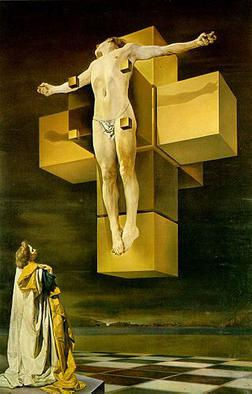
Salvador Dalí –
Christus
und der Hyperwürfel
When religion and higher dimensions meet in a work of art.
01
The original thought
In 1954, Salvador Dalí created the painting Corpus Hypercubus, also known as Crucifixion. The work shows Christ before the three-dimensional unfolding of a four-dimensional hypercube. A hypercube is the four-dimensional equivalent of an ordinary cube. Just as a three-dimensional cube can be unfolded as a net of squares, the structure of a four-dimensional hypercube can be illustrated by an arrangement of three-dimensional cubes. In this work, Dalí combined religious concepts with mathematics and modern science.
02
The trail to 2T-M theory
The painting connects three ideas that are also of central importance for 2T-M: Christ, death and resurrection, and a higher spatial dimension. The 2T-M theory postulates that heaven could be part of a more comprehensive dimensional reality. Dalí's work offers an exceptionally impressive artistic parallel for this.
The crucial connection: A transition between different realities is represented using higher-dimensional geometry.
RESEARCH
Ian Stevenson – Reports on past lives
Could information be accessible beyond the boundaries of a single life?

01
The observation
The psychiatrist Ian Stevenson investigated reports of children who claimed to remember previous lives over several decades.
Some of his investigations included statements about people, places, and events that, according to the families, were connected to a previous life.
Stevenson also dealt with reports of birthmarks and physical characteristics that were associated with injuries of alleged previous persons.
The interpretation of these investigations is scientifically controversial.
02
Die Spur zur 2T-M-Theorie
For the 2T-M theory, the concept of reincarnation does not have to be the focus.
A more general question is more interesting:
Could information be accessible beyond the usual spatial and temporal boundaries under certain conditions?
If consciousness or information could exist in a more comprehensive dimensional structure, this would open up new questions about its accessibility.
The crucial connection: The possibility of accessing information outside ordinary life and memory boundaries.
RESEARCH
Jacques Vallée – UFOs, UAPs und höhere Dimensionen
Könnten manche ungewöhnlichen Erscheinungen aus einer höheren räumlichen Perspektive anders erklärt werden?
01
Die Beobachtung
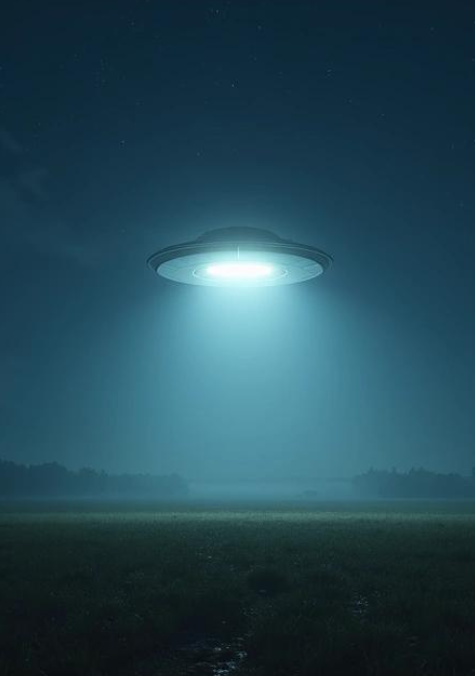
Computer scientist and UFO researcher Jacques Vallée has spent decades studying unusual aerial phenomena.
In doing so, he criticized the notion that such phenomena must be interpreted exclusively as spaceships from extraterrestrial visitors.
He discussed alternative interpretative frameworks, including considerations of other levels of reality and unusual relationships between space, time, and perception.
However, many UFO and UAP reports do not have a sufficiently secure data basis for far-reaching conclusions.
02
Die Spur zur 2T-M-Theorie
The thought experiment Flatland (Abbott) provides an interesting geometric perspective.
A higher-dimensional object could only appear partially in a lower-dimensional world.
From the perspective of the inhabitants there, unusual shape changes or an apparent appearance and disappearance would be conceivable under certain geometric conditions.
Transferred to our world, this results in a research question:
How would higher-dimensional structures appear if they interacted with our familiar 3+1-dimensional world?
This is not about claiming that UFOs or UAPs actually originate from other dimensions.
The crucial connection: Some seemingly unusual spatial phenomena can be viewed as a thought experiment from a higher-dimensional perspective.
LITERATURE
Philip K. Dick – VALIS
Could a second reality be hidden behind our familiar world?

01
The original thought
In his novel VALIS, Philip K. Dick combines science fiction, philosophy, religious concepts, and extraordinary experiences. The story deals with the possibility that the seemingly familiar reality does not encompass everything that exists. Behind it, another order could be hidden, which only becomes accessible under special conditions.
02
The Path to 2T-M Theory
The 2T-M theory postulates a more comprehensive reality, of which we normally perceive only a limited segment. Dick's literary reflections take up a similar motif: A second reality could exist simultaneously with our familiar world.
The crucial connection: A hidden reality does not have to be spatially separated from our world.
SCIENCE
Itzhak Bars – Physics with two time dimensions
A second time dimension is more than a philosophical thought experiment.
Der ursprüngliche Gedanke
Der theoretische Physiker Itzhak Bars entwickelte die sogenannte Two-Time Physics.
In diesem Forschungsansatz werden physikalische Systeme in einer Raumzeit mit zwei Zeitdimensionen beschrieben. Besondere mathematische Symmetrien ermöglichen es, verschiedene gewöhnliche physikalische Systeme als unterschiedliche Darstellungen einer umfassenderen Struktur zu verstehen.
Damit untersucht Bars eine ungewöhnliche Möglichkeit: Die vertraute Beschreibung der Physik mit einer Zeitdimension könnte aus einem höherdimensionalen Rahmen hervorgehen.
Die Spur zur 2T-M-Theorie
The 2T-M theory also postulates two time dimensions.
Bars' research is therefore a significant starting point. It shows that additional time dimensions can be investigated under certain mathematical conditions.
His models are not identical to the postulated 9+2 framework. Nevertheless, they open up a possible way to think about the mathematical consequences of a second time dimension.
The crucial connection: A second time dimension does not necessarily have to lie outside of mathematically formulatable physics.
Paraphrased summary of the research approach · Not a literal quote from Itzhak Bars
SCIENCE
Stringtheorie,
M-Theorie und
Calabi-Yau-Räume
Könnten zusätzliche Raumdimensionen Teil unserer unmittelbaren Wirklichkeit sein?

Der ursprüngliche Gedanke
Die Stringtheorie beschreibt fundamentale Teilchen als unterschiedliche Schwingungszustände winziger eindimensionaler Strings. Ihre mathematischen Modelle verwenden zusätzliche Raumdimensionen.
In verbreiteten Stringmodellen werden sechs zusätzliche räumliche Dimensionen angenommen. Diese könnten so kompakt sein, dass wir sie mit unseren gewöhnlichen Sinnen und heutigen Experimenten nicht unmittelbar wahrnehmen.
Eine wichtige mathematische Möglichkeit zur Beschreibung ihrer Geometrie sind sechsdimensionale Calabi-Yau-Räume.
Die M-Theorie führt verschiedene stringtheoretische Ansätze in einem elfdimensionalen Rahmen zusammen, üblicherweise mit zehn Raum- und einer Zeitdimension.
The trail to the 2T-M theory
There are two particularly interesting connections here.
First: The concept of additional spatial dimensions is already established in theoretical physics – as a mathematically investigated approach, not as an experimentally confirmed finding.
Second: Additional dimensions do not have to be located elsewhere in the universe. They could be part of the structure of spacetime that already surrounds us.
The 2T-M theory takes up the idea of an eleven-dimensional framework, but postulates a different division: nine spatial and two time dimensions.
The crucial connection: A more comprehensive dimensional reality would not have to exist somewhere far away.
SOURCE
01
The observation
In Berichten über Meditation, mystische Erfahrungen und psychedelische Bewusstseinszustände tauchen wiederholt ungewöhnliche Beschreibungen auf. Menschen berichten beispielsweise:
- They would no longer have had an ordinary sense of time.
- Past, present, and future would no longer have been clearly separated.
- They would no longer have been in a specific place.
- The distinction between inside and outside would have disappeared.
- They would have perceived a more comprehensive unity or order.
Such experiences can vary greatly and are studied, among other things, psychologically and neurologically.
RESEARCH
Mystical and psychedelic states – Beyond space and time
Die entscheidende Verbindung: Manche Bewusstseinszustände verändern nicht nur unser Zeitgefühl, sondern auch unsere grundlegende Erfahrung von Raum und Perspektive.
What does it mean to no longer experience oneself in a specific place or in an ordinary temporal sequence?

02
The trail to 2T-M theory
2T-M-theory postulates additional spatial and temporal dimensions. Therefore, it would be interesting to systematically investigate such experiences according to spatial and temporal characteristics.
Reports of timelessness might raise different questions than experiences of a more comprehensive spatial perspective. Particularly interesting would be experiences in which both changes occur simultaneously.
RESEARCH
Near-Death Experiences – A Different Perception of Space and Time
What do people experience on the border between life and death?
01
Die Beobachtung
Menschen berichten im Zusammenhang mit Nahtoderfahrungen von aussergewöhnlichen Bewusstseinszuständen.
Zu den beschriebenen Erfahrungen gehören unter anderem:
- The feeling of perceiving one's own body from the outside.
- An altered perception of distance and movement.
- Tunnels, light, and transitions.
- Encounters with people or other perceived figures.
- A comprehensive life panorama.
- The sensation of timelessness or another reality.
Scientific studies such as AWARE-II are investigating reports of consciousness and memories in connection with cardiac arrest and resuscitation.
The exact origin and significance of such experiences continue to be studied.

The crucial connection: Some near-death experiences contain unusual spatial and temporal experiences at the same time.
02
The trail to the 2T-M theory
For the 2T-M theory, it is not only changes in the perception of time that are interesting.
At least as remarkable are the reports of a different spatial perception.
How might a consciousness experience the world if it had access to additional spatial or temporal dimensions?
The described experiences provide interesting questions for a systematic investigation. However, they do not in themselves prove access to additional dimensions.
Own translation · Dr. Sam Parnia, Lead Researcher AWARE-II, 2023
RESEARCH
Sterbebettvisionen – Begegnungen am Lebensende
Why do the dying so frequently report seeing people who have already passed away?
01
The Observation
In hospice and end-of-life research, there are reports of people describing extraordinary experiences shortly before their death.
These frequently involve encounters with deceased relatives or familiar individuals.
Some dying people report that someone is waiting for them or will come to collect them.
In scientific studies, these experiences are often described as deathbed visions or end-of-life dreams and visions.
Other content, including encounters with living persons, also occurs.

02
The trail to the 2T-M theory
The 2T-M theory opens up an unusual question:
What if the transition between our familiar 3+1-dimensional experiential world and a more comprehensive dimensional reality did not only take place upon biological death?
Could access to such a reality change during the dying process itself?
The question is speculative. That is precisely why it would be interesting to systematically investigate the recurring features of such experiences.
The crucial connection: The dying process could be linked to changes in conscious experience, the patterns of which deserve closer examination.
RESEARCH
Terminal Lucidity – When consciousness returns
Warum zeigen manche schwer erkrankten Menschen kurz vor dem Tod überraschende geistige Klarheit?
01
Die Beobachtung
Es gibt Berichte über Menschen mit schweren neurologischen oder psychiatrischen Erkrankungen, die kurz vor ihrem Tod unerwartet wieder klar denken, sprechen oder auf Erinnerungen zugreifen können.
Solche Episoden werden als terminale Klarheit bezeichnet.
Besonders bemerkenswert erscheinen Berichte über Menschen, deren geistige Fähigkeiten zuvor über längere Zeit stark eingeschränkt waren.
Die Ursachen dieser Ereignisse sind noch nicht vollständig geklärt.

Own translation · Michael Nahm and Bruce Greyson, The Death of Anna Katharina Ehmer: A Case Study in Terminal Lucidity, 2013
02
The trail to the 2T-M theory
Our current understanding links conscious experience closely with the function of the brain.
The 2T-M theory further asks whether consciousness must fundamentally be limited to our ordinary dimensional world of experience.
This leads to a possible hypothesis:
Could the relationship between brain function and consciousness change during a transition into a more comprehensive reality?
Before such an interpretation could be scientifically tested, neurological explanations and the actual conditions of such episodes would need to be examined more precisely.
The crucial connection: Terminal lucidity raises fundamental questions about the relationship between the brain, memory, and consciousness.
FORSCHUNG
Ausserkörperliche Erfahrungen – Der Blick von aussen
Kann sich unser räumlicher Beobachtungsstandpunkt verändern?

01
The observation
During out-of-body experiences, people report perceiving their bodies from a different spatial perspective.
Some experience themselves, for example, above their bodies or in another location in the room.
Similar changes in perception can occur under certain neurological conditions or experimental setups.
Research is investigating, among other things, how the brain combines information about body position, movement, and spatial orientation into a unified sense of self.
02
The path to 2T-M theory
For 2T-M, a further geometric question arises:
How would a consciousness perceive spatial positions if additional spatial dimensions were accessible to it?
Our ordinary perspective is bound to a three-dimensional viewpoint.
A more comprehensive spatial structure could theoretically allow for other perspectives.
The crucial connection: Our ordinary sense of body and our spatial observational standpoint are not immutable.